


The list of blind styles keeps growing, and there’s no single best blind – only the best blind for a specific window, room, and lifestyle. A bathroom needs something different from a home office, and a sun-drenched living room needs something different from a nursery. This guide breaks down every major blind type sold in Australia and how to match the right style to the right room.
Common Types of Blinds Explained
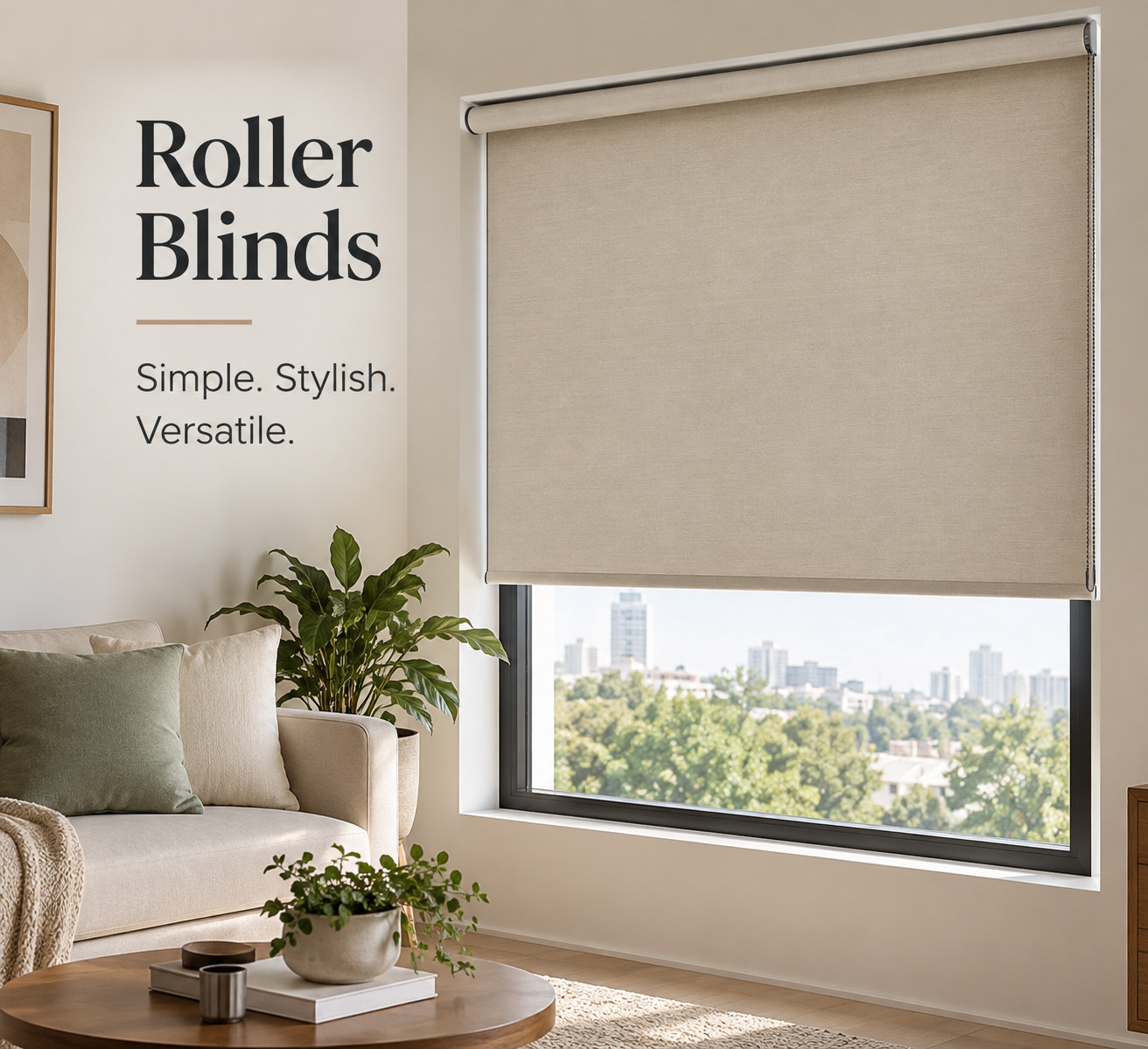
1. Roller Blinds
Roller blinds are made from a single piece of fabric that rolls neatly around a tube at the top of the window – simple, affordable, and available in a huge range of fabrics, from sheer light-filtering weaves to fully opaque blockout blinds. The flat fabric gives a clean, streamlined look, and sunscreen fabrics filter glare and UV while preserving the view.
Best for: living rooms, bedrooms, kitchens, and home offices – any room needing a fuss-free, budget-friendly covering.
2. Double Roller Blinds
Double roller blinds (day-and-night blinds) combine a sheer layer and a blockout layer on one dual bracket system, solving the usual trade-off between light and privacy: you switch between filtered daylight and complete darkness from the same headrail.
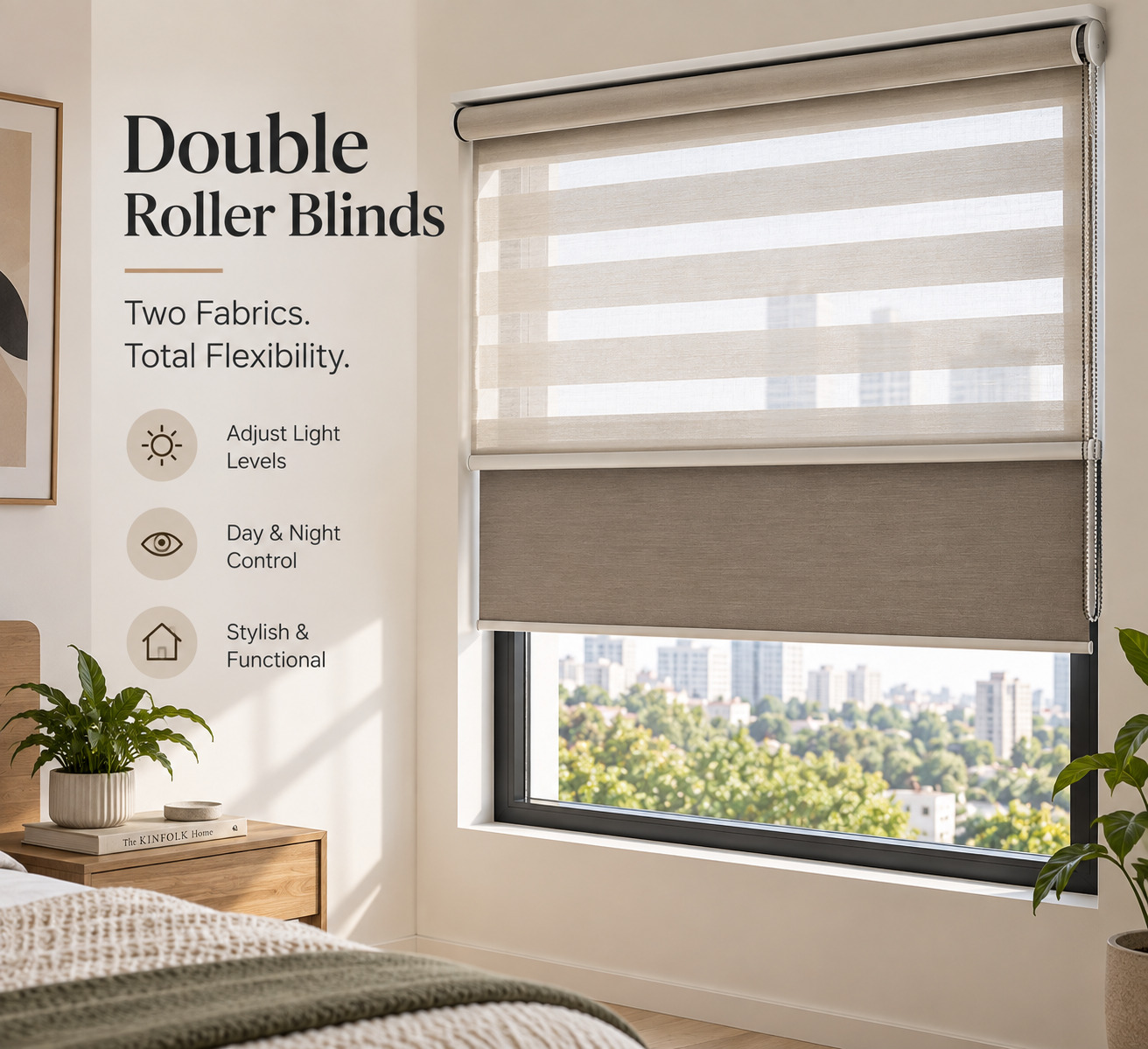
Best for: bedrooms, media rooms, and living areas where light needs change through the day.
3. Motorised Roller Blinds
A motorised roller blind uses a battery-powered or hardwired motor instead of a manual chain, letting you raise, lower, or schedule blinds via remote, wall switch, or app many now work with Google Home or Amazon Alexa. Motorisation has become mainstream in 2026 since improved battery tech means retrofitting no longer needs an electrician, making it especially useful for hard-to-reach windows.
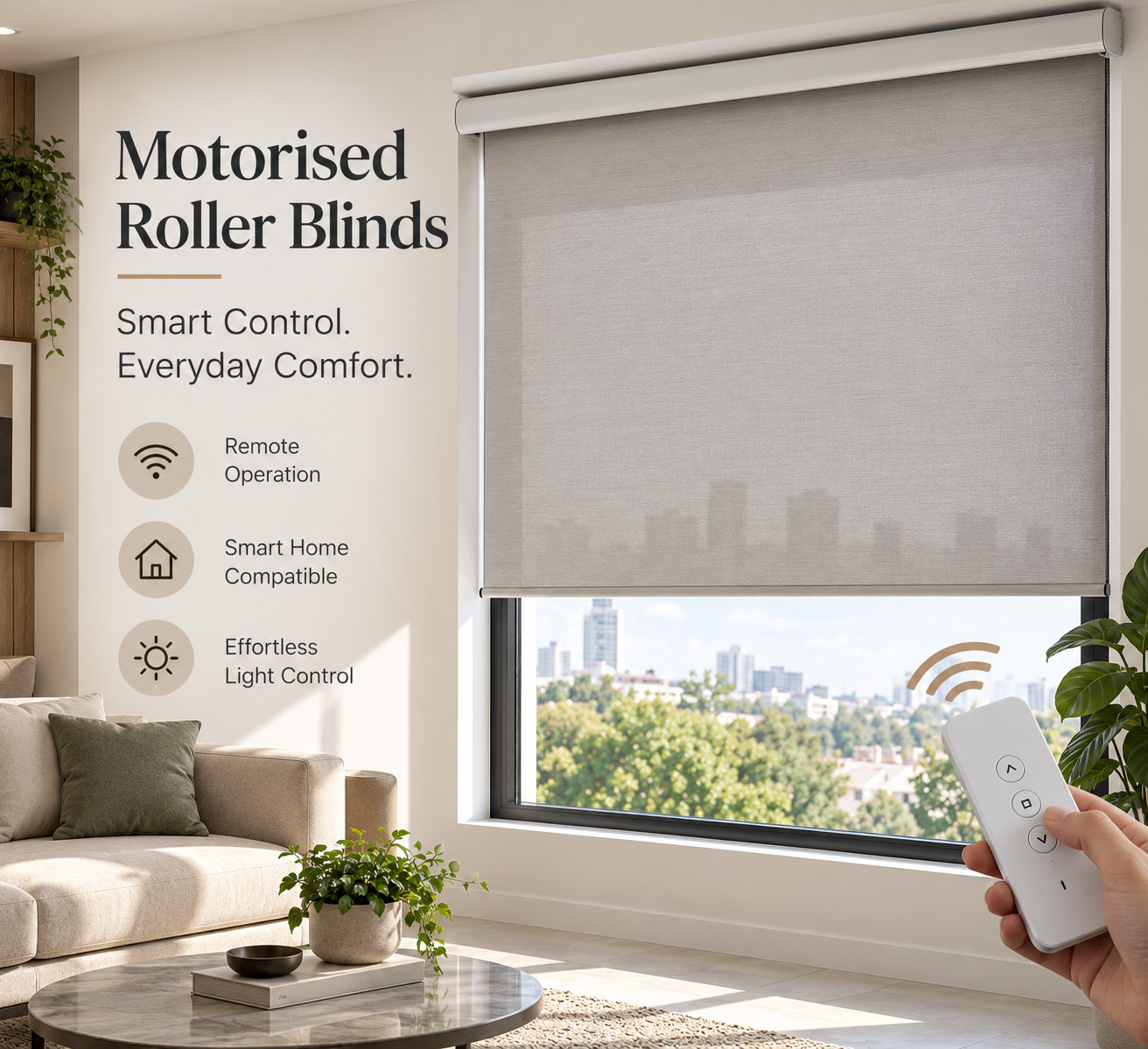
Best for: hard-to-reach windows and smart homes wanting convenience without sacrificing style.
4. Venetian Blinds
Venetian blinds feature horizontal slats – aluminium, PVC, or timber – that tilt open and closed on a cord or wand, letting you fine-tune light and privacy without raising the blind. Aluminium versions are durable and moisture-resistant for kitchens and bathrooms, while timber and PVC bring a warmer, classic look.
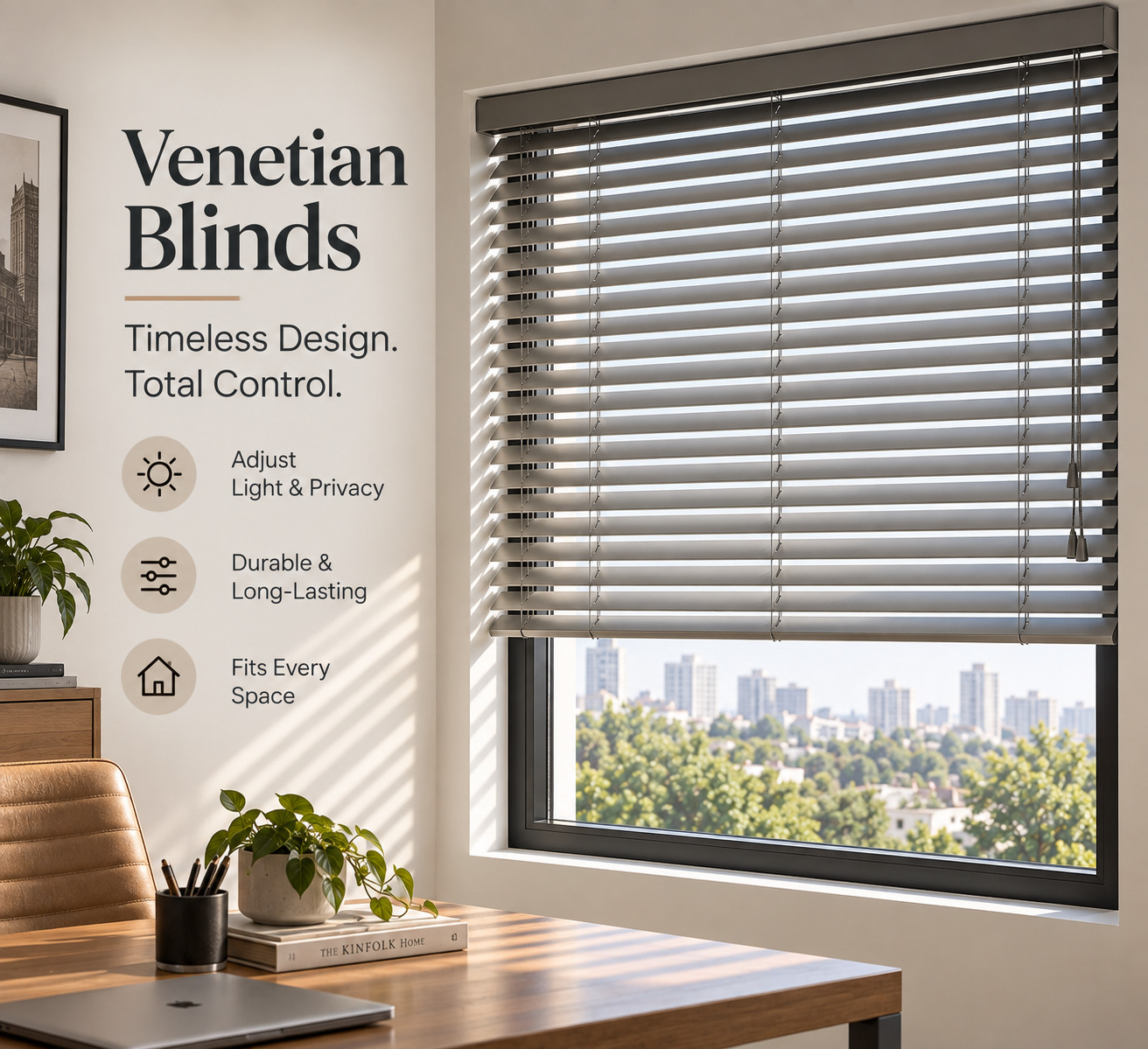
Best for: home offices, kitchens, and bathrooms needing precise light adjustment.
5. Vertical Blinds
Vertical blinds use hanging slats that rotate and slide side to side along a track rather than raising and lowering, making them ideal for wide windows and sliding glass doors – the slats stack neatly to one side without interfering with foot traffic. Available in fabric, PVC, and light-filtering or blockout materials.
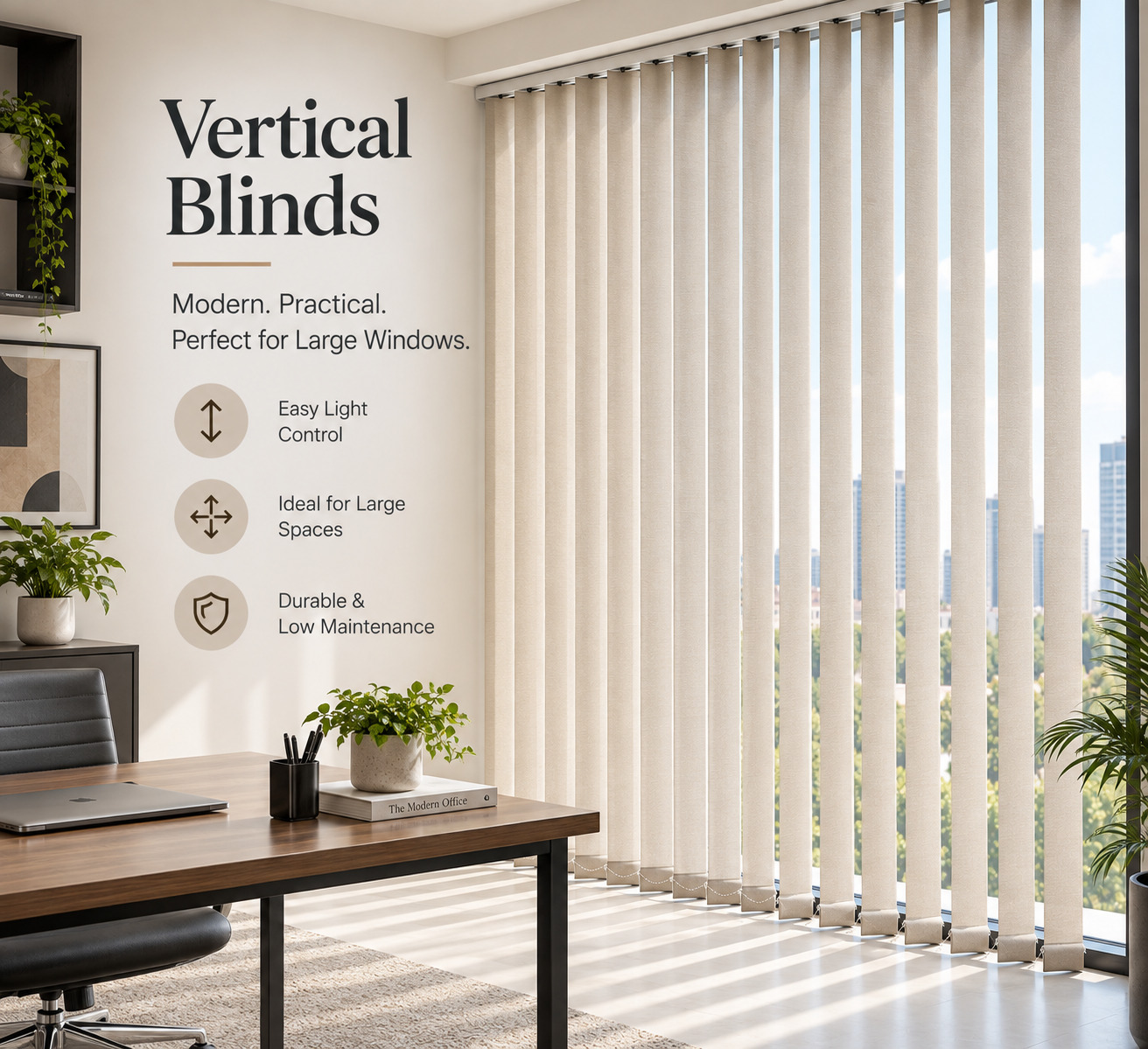
Best for: sliding doors, patio doors, and wide or floor-to-ceiling windows.
6. Panel Blinds (Panel Glide Blinds)
Panel blinds, or panel glide blinds, are a modern alternative to vertical blinds: wide fabric panels glide along a track and overlap slightly as they close, creating fewer visible lines and a clean, uninterrupted look – a favourite for large windows and modern open-plan homes.
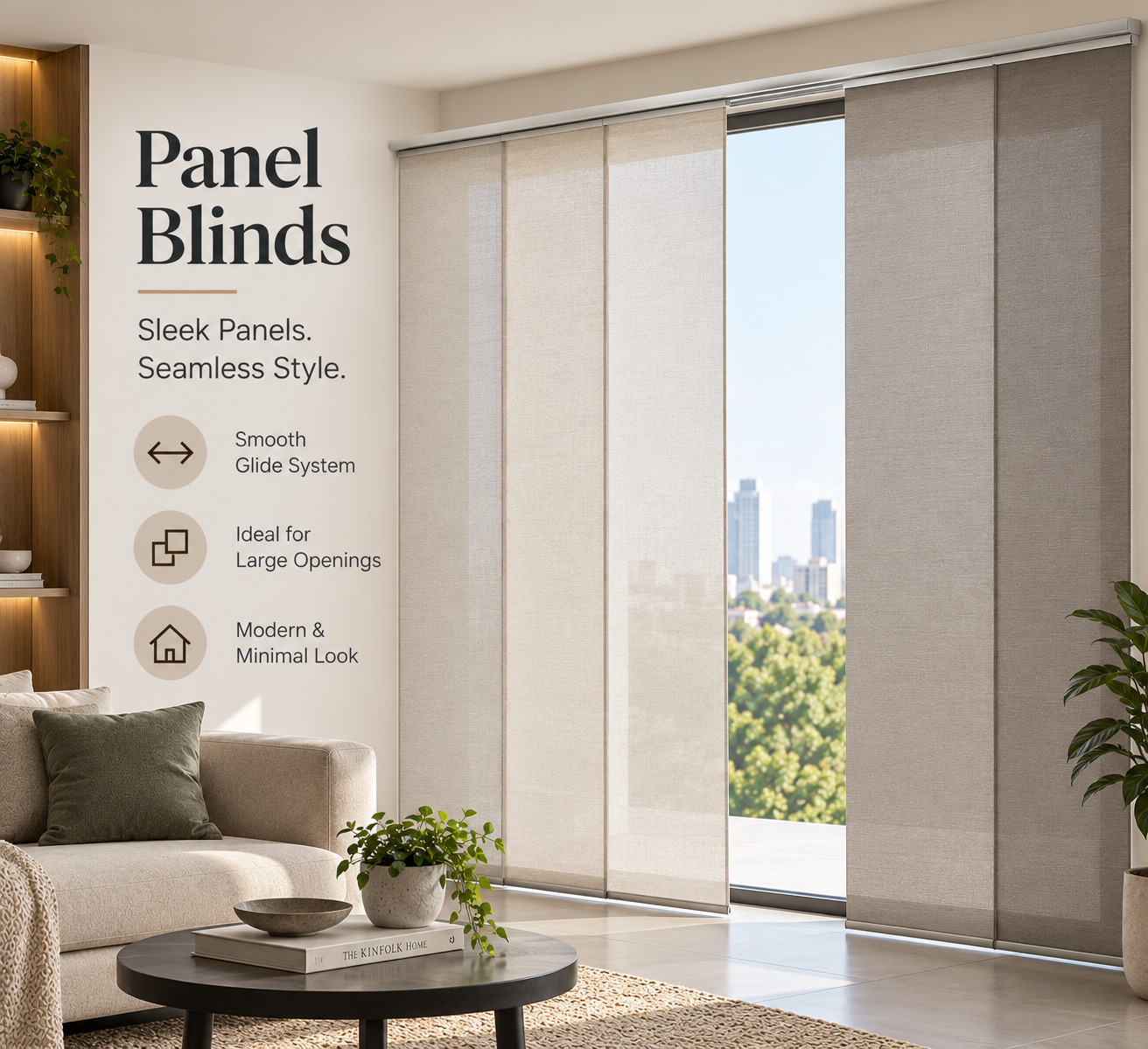
Best for: large sliding doors and floor-to-ceiling windows in contemporary interiors.
7. Roman Blinds
Roman blinds fold into neat horizontal pleats as they’re raised, giving a soft, tailored look suited to formal or classic interiors like dining rooms and main bedrooms. Available from sheer through to fully blockout fabrics, so you get the look and the light control together.
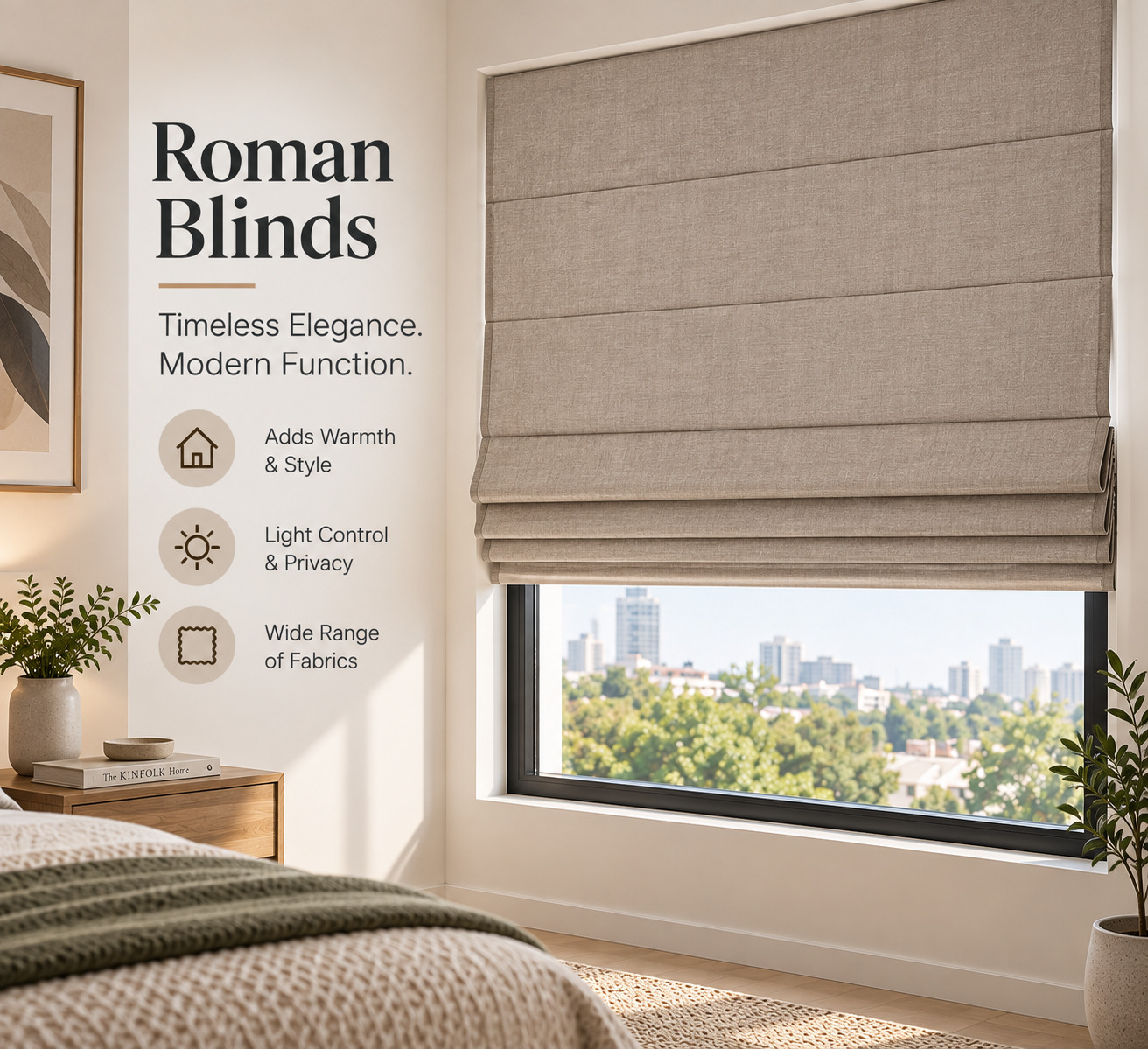
Best for: formal living areas, dining rooms, and bedrooms wanting a softer, fabric-led look.
Other Blind Styles Worth Knowing
Honeycomb (Cellular) Blinds
Named for their honeycomb-shaped cells when viewed from the side, these blinds are built from pleated fabric that traps a layer of air, insulating rooms in both winter and summer, a strong pick for energy-conscious homeowners.
Blockout Blinds
Rather than a standalone style, blockout blinds describe a fabric type applied across roller, Roman, and panel blinds. It prevents almost all light from passing through, making it the go-to for bedrooms, nurseries, and media rooms, while also adding thermal insulation and noise reduction.
How to Choose the Right Blinds
Work backwards from your actual needs: window shape, room purpose, and the problem you’re solving rather than picking a style because it looks nice in a photo.
- Sliding doors or wide openings: vertical or panel blinds, built for side-to-side operation.
- Insulation and energy savings: honeycomb blinds trap air; blockout roller blinds add a thermal barrier too.
- Harsh, direct sunlight: sunscreen or mesh roller blinds cut glare and UV while preserving the view.
- Total darkness and privacy: blockout roller, Roman, or double roller blinds work best.
- Convenience and smart homes: a motorised roller blind removes cords entirely and can be scheduled or voice-controlled.
- Budget-friendly and versatile: standard roller blinds suit almost every room at the lowest price point.
How Are Blinds Installed?
Most indoor roller, Venetian, vertical, and Roman blinds use an inside mount (brackets inside the window recess for a neat, built-in look) or an outside mount (brackets on the wall or frame around the opening, useful when recess depth is limited). Vertical and panel blinds use an overhead track instead, so the slats or panels can slide — the same track-based approach works well beyond windows too, which is why panel blinds are a popular choice as a shutter room divider for zoning open-plan spaces. Most made-to-measure blinds, including those from My Direct Blinds, are designed for straightforward DIY installation with just a cordless drill and a good measuring guide.
Final Thoughts
Choosing the right blinds gets simple once you break it down by room, function, and light requirements. Whether you need the everyday versatility of roller blinds, the side-to-side practicality of vertical or panel blinds, or the total darkness of blockout blinds, there’s a style built for the job and a motorised roller blind adds a level of convenience that manual blinds can’t match.
If you’re still comparing options, My Direct Blinds offers a full range of made-to-measure roller, double roller, motorised, Venetian, vertical, panel blinds and also a wide range of curtains, sheer curtains and plantation shutters with detailed measuring and installation guides to help you get it right the first time. Explore the full range at My Direct Blinds today, shop now to find the perfect made-to-measure blinds for your home.
FAQs
What are the different types of blinds?
The main types include roller, double roller, motorised roller, Venetian, vertical, panel, Roman, and honeycomb blinds. Each differs in how it operates rolling, tilting, sliding, or folding and in materials used, from fabric and aluminium to PVC and timber.
What kind of blinds are in style in 2026?
Motorised roller blinds, honeycomb blinds for insulation, and layered combinations such as a blockout blind paired with a sheer curtain are among the most popular choices in 2026, alongside warmer, natural colour tones.
What’s the easiest way to decide between fabric and slat blinds?
Think about maintenance and light preference. Slat-based blinds like Venetians tilt for fine light control and wipe clean easily, suiting kitchens and bathrooms. Fabric blinds roller, Roman, and panel styles give softer light diffusion and a more tailored finish, better suited to living rooms and bedrooms where atmosphere matters more than quick cleaning.
How are blinds actually installed once you’ve chosen a style?
It comes down to brackets versus tracks. Roller, Venetian, and Roman blinds mount on brackets inside the recess or on the wall above it, usually fitted with a cordless drill in minutes. Vertical and panel blinds sit on an overhead track instead, which needs careful levelling so the slats or panels glide without catching.
Are motorised blinds worth the extra cost?
For hard-to-reach windows, households with young children, or anyone wanting scheduling and voice control, a motorised roller blind is generally a worthwhile investment, and better battery tech has made retrofitting far more affordable.
Is there a rule of thumb for how many blind styles exist?
Most window coverings sort into three mechanical families: slats that tilt (Venetian and vertical), a single panel that rolls or folds (roller and Roman), and panels that glide side to side (panel blinds). Knowing which family suits your window shape narrows down the specific style quickly.