


The curtains or blinds you choose do more than dress a window; they control light, privacy and how well a room holds heat. Get the fit or fabric wrong and even a well-decorated room can look unfinished. Broadly, you have two paths: made-to-measure window treatments, built to your window’s exact dimensions, or off-the-shelf curtains and blinds, produced in standard sizes. Which one suits you comes down to window size, budget, style, and how practical you need the solution to be.
What Are Made-to-Measure Curtains & Blinds?
Made-to-measure window treatments are built for one window, using the exact measurements you or an installer take before manufacturing begins: measure the recess, choose a fabric and style, have the product cut and assembled to those measurements, then install it on arrival.
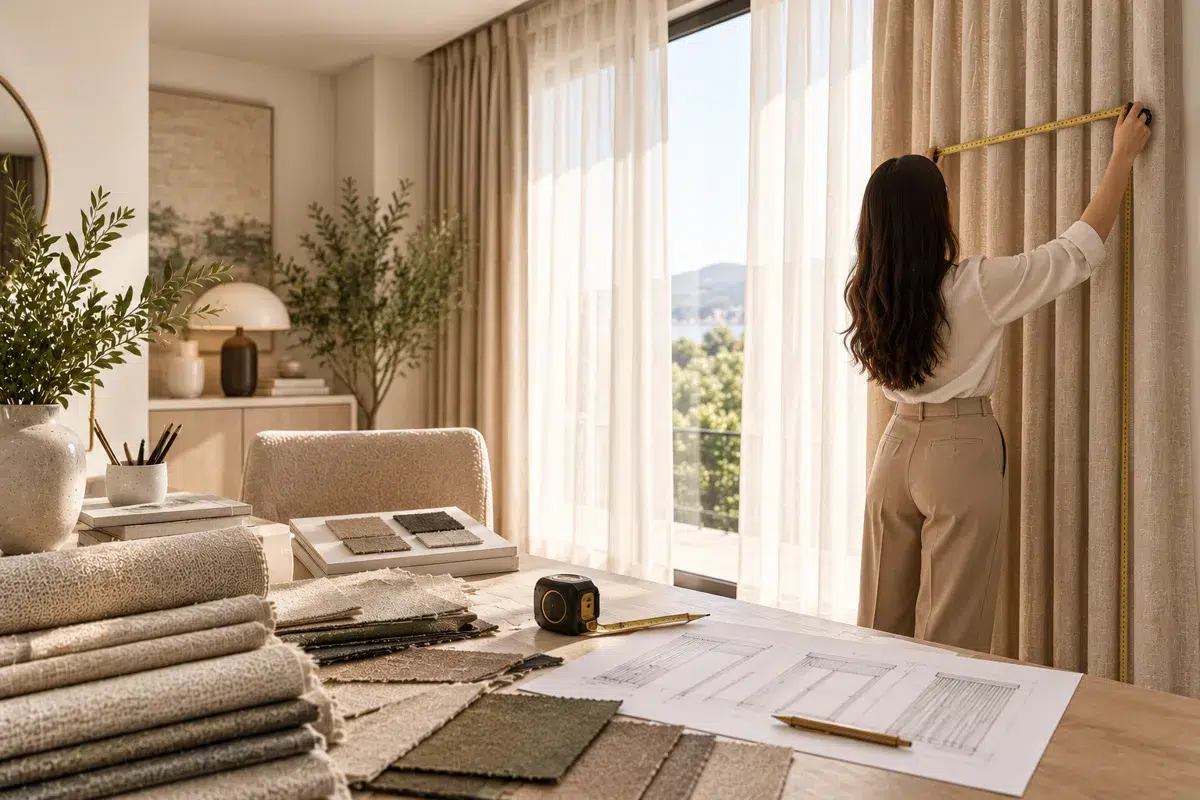
Because everything is made to order, you get far more control over the result:
- Size and fit — precise width and drop, including unusual heights or bay windows.
- Fabrics and colours — full textures and weights, from sheer curtains to a heavy blockout curtain.
- Lining — thermal or blockout linings sewn in rather than added later.
- Headings and finishes — pencil pleat, pinch pleat, eyelet, or a tailored pelmet.
- Operating mechanisms — corded, wand-operated or motorised tracks.
- Light and privacy control — layered options like double roller blinds, combining a sheer and blockout roller blind in one headrail.
This is also the only way to get certain products: plantation shutters and panel glide blinds are almost always made-to-order because each panel must match the exact opening.
What Are Off-the-Shelf Curtains & Blinds?
Off-the-shelf, or ready-made, curtains and blinds are manufactured in advance to standard sizes and sold as is — fixed drop lengths (commonly around 137cm, 180cm and 213cm) and a curated but limited range of colours and fabrics, usually stocked in homeware stores or available for fast online delivery.
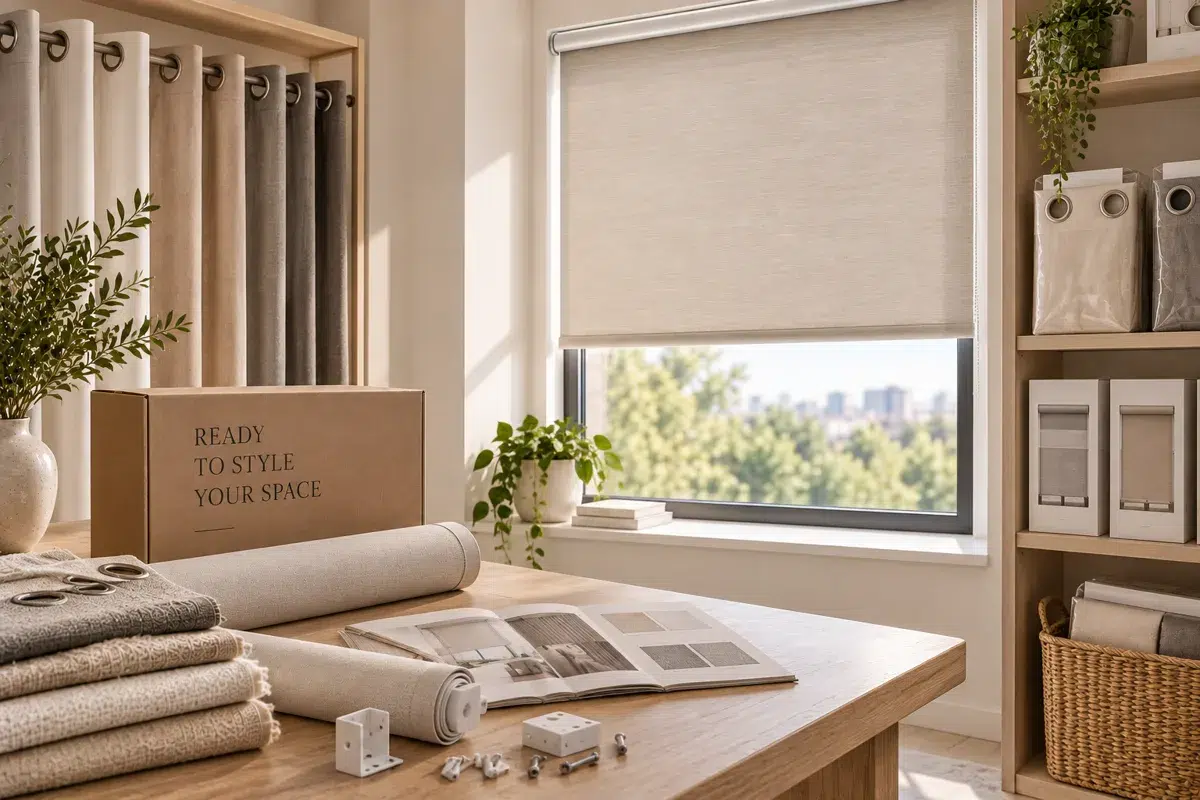
Their biggest advantage is speed. If your window matches a common size, you can pick a style, pay, and have it hanging within a day or two — no measuring appointment, no production run to wait on. That makes off-the-shelf treatments practical for rentals, quick refreshes, or rooms where an exact fit isn’t critical.
Made-to-Measure vs Off-the-Shelf: Key Differences
| Factor | Made-to-Measure | Off-the-Shelf |
|---|---|---|
| Size & Fit | Cut to your window’s exact dimensions, including odd or oversized openings | Fixed standard sizes; may need trimming or leave gaps on unusual windows |
| Style & Personalisation | Full choice of fabric, colour, lining, heading style and mechanism | Limited to current stock — fewer colours, fabrics and finishes |
| Lead Time | Roughly 1–3 weeks for measuring, manufacturing and delivery | Available immediately or within a day or two |
| Quality & Durability | Typically heavier fabric, reinforced stitching and sewn-in linings | Varies widely; budget ranges use lighter fabric and simpler construction |
| Installation | Often DIY-friendly with the right guide, though some choose professional fitting | Straightforward DIY installation for most products |
Size & Fit
A custom fit matters most on windows that are not a standard shape — bay windows, sliding doors, or an uneven recess. Made-to-measure is cut to those exact numbers, so there’s no gap at the floor and no light leaking around a blockout curtain’s edges. Off-the-shelf works fine when your window matches a common size, but anything irregular usually needs trimming or doesn’t sit right.
Style & Personalisation
Made-to-measure opens the full catalogue of every fabric, colour, lining and heading a supplier offers, plus products that don’t come ready-made at all, like plantation shutters or panel glide blinds. Off-the-shelf ranges are curated for broad appeal, so you’re choosing from what’s in stock rather than exactly what you pictured.
Lead Time
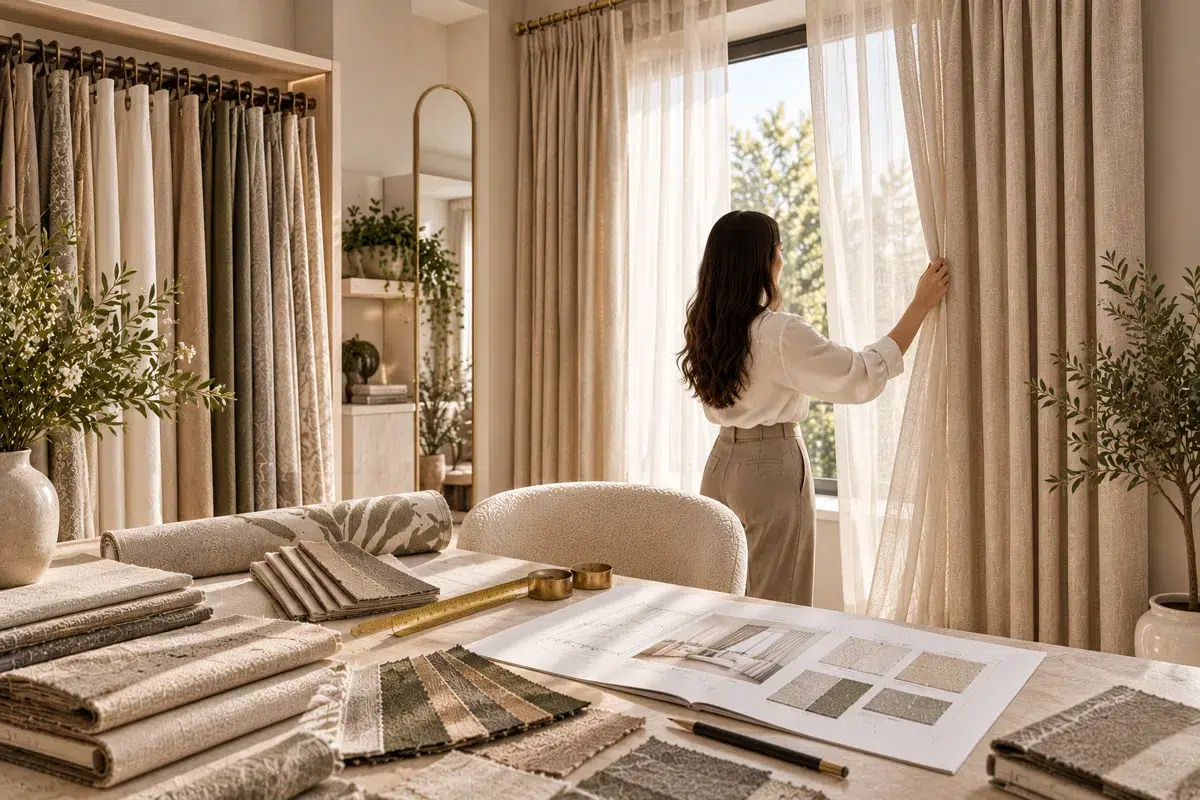
Off-the-shelf wins outright here. Ready-made curtains and roller blinds can be bought and installed within days, while made-to-measure is manufactured after you order, so expect one to three weeks. For a tight deadline — moving day, a nursery, a home staged for sale — that difference matters.
Quality & Durability
Quality isn’t automatically better on either side. That said, made-to-measure ranges more often use heavier fabric and thermal or blockout linings sewn directly in, while off-the-shelf spans a wider spectrum, from serviceable to noticeably thin at the cheapest end.
Installation
Both categories are generally DIY-friendly — roller blinds, double roller blinds and curtain tracks are typically installed with basic tools, made-to-measure or off-the-shelf alike. Heavier products like plantation shutters sometimes benefit from professional fitting, simply due to their weight.
Which Option Is Right for Your Home?
Choose made-to-measure if: your windows are an unusual size or shape, you want a specific fabric or heading style rather than whatever’s in stock, you need precise light control from a true blockout roller blind or blockout blinds with no gaps, or you’re furnishing a home you plan to keep.
Choose off-the-shelf if: your windows are a standard size, you’re working with a tighter budget or a rental, you need something installed quickly, or the room is low-priority and likely to be redecorated again soon.
Consider a combination approach. Many homeowners choose made-to-measure lined curtains or shutters for living areas and main bedrooms, and keep off-the-shelf curtains for guest rooms or spaces they expect to change again. My Direct Blinds sells its entire range of roller blinds, plantation shutters, sheer and blockout curtains as made-to-order, so you needn’t give up customisation to get a reasonable price or timeframe.
Why a Fabric Sample Beats a Product Photo
Whichever way you lean, the most common disappointment with either option isn’t fit or lead time — it’s colour. A blockout curtain or roller blind fabric that looks crisp white or warm grey on a screen can read completely differently once it’s hanging against your actual walls, floor and natural light.
That’s because a monitor displays colour through backlit pixels, while fabric only shows colour by reflecting the light in the room, which shifts through the day and differs by which way a room faces. A shade that looks neutral under bright shop lighting can look colder or warmer by a north-facing window in the late afternoon. Holding a physical swatch against the wall at different times of day is the only reliable way to judge it, which is why suppliers who post free fabric samples are worth using before you commit. My Direct Blinds, for instance, sends up to ten free samples by priority post so the colour on-screen can be checked against the colour in the room before an order goes in.
This step matters more for made-to-measure, since a wrongly-coloured custom curtain is a bigger loss than a ready-made one you can exchange. It’s still worth doing for off-the-shelf, too — sizing on ready-made stock is fixed, so a curtain that’s the wrong length or width often has to be cut down or taken up yourself to fit, and that’s not easily undone either.
Conclusion
There’s no single right answer, only the option that fits your window, budget and timeline. If you’re dealing with an odd-shaped window or furnishing a home you intend to keep, made-to-measure is worth the wait. If you need something functional and affordable fast, off-the-shelf will do the job well. Whichever way you lean, measure carefully before you order — getting that step right matters more than which option you choose.
Browse the full made-to-measure range at My Direct Blinds, where factory-direct pricing and free fabric samples make it easy to get a tailored fit without the tailored price tag. Shop now and have your new curtains, blinds or shutters on their way to your door.
FAQs
Can I mix made-to-measure and off-the-shelf in the same home?
Yes, and it’s common practice. Many homeowners reserve made-to-measure for living areas and bedrooms where fit and light control matter most, and keep off-the-shelf curtains for guest rooms or spaces they’ll likely redecorate again soon.
Are blockout blinds better than blockout curtains for light control?
Blockout roller blinds generally block light more completely, since the fabric sits close against the frame with minimal edge gaps. Blockout curtains can still let light in around the sides and top unless fitted with a pelmet or hung wider than the window.
Do made-to-measure window furnishings actually help with energy bills?
They can. A precise fit closes the drafts and light gaps that let heat escape in winter and build up in summer, so a well-fitted blockout curtain or lined blind acts as an extra layer of insulation.
What’s the difference between blockout blinds and blockout roller blinds?
Blockout blinds is the general category covering any blind made with 100% light-blocking fabric, including Roman blinds, panel glides or verticals. Blockout roller blinds refers specifically to a single roll-up blind made from blockout fabric.
Do I need professional installation for made-to-measure products?
Not usually. Most made-to-measure roller blinds, double roller blinds and curtain tracks are designed for DIY fitting with basic tools. Heavier items like plantation shutters can benefit from a second pair of hands, but a tradesperson isn’t a requirement for most homes.
How long does a made-to-measure order take compared to buying off-the-shelf?
Made-to-measure products are manufactured after you order, so expect roughly 1–3 weeks depending on the product, versus near-immediate availability for typical off-the-shelf ranges.