


Every room in your house asks for something different from its windows. The bedroom wants darkness and quiet. The kitchen needs to survive steam and splashes. The bathroom wants privacy without ever going soggy, and the living room just wants to look good while doing a bit of everything. That’s why a single, one-size-fits-all approach to window furnishings rarely works.
Below is a practical, room-by-room guide to choosing the right curtains and blinds for light, privacy, and style, plus answers to the questions homeowners search most when planning a window makeover.
Bedroom: Prioritise Sleep, Darkness, and Warmth
The bedroom is where light control matters most, since even a small gap of morning sun can disrupt sleep. This is where blockout curtains genuinely shine.
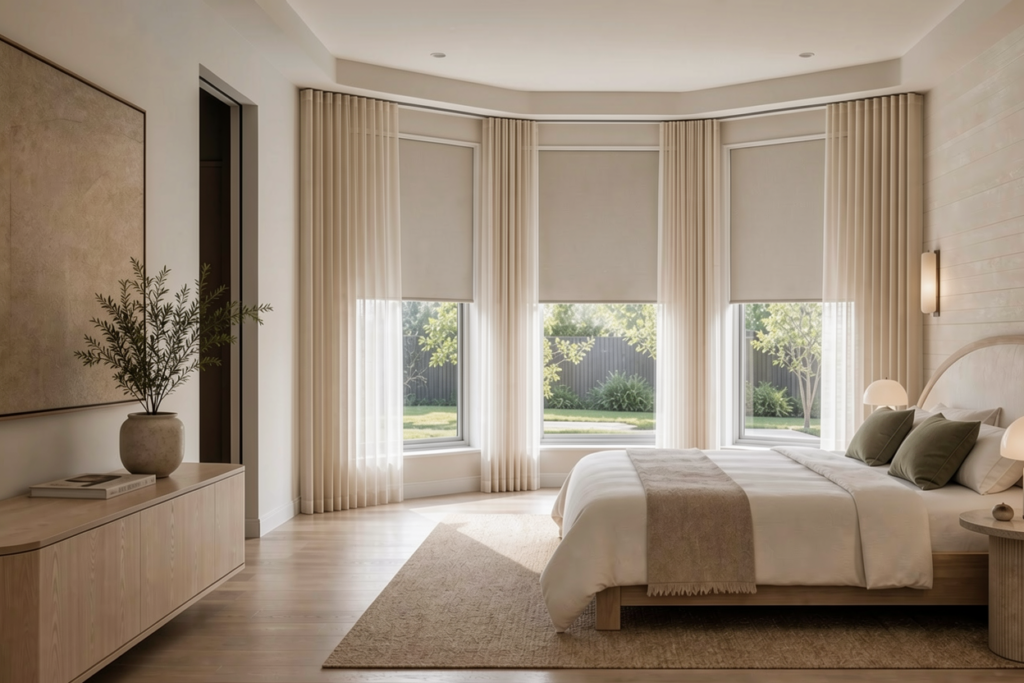
1. Blackout Roman Blinds
Roman blinds made up in a blockout fabric fold into soft, neat pleats when raised, so they don’t eat into the room the way bulky drapes can. They suit smaller bedrooms or windows above a bedhead, and because they’re custom-made to the exact window size, they close with almost no light gap at the edges.
2. Double Curtains: Sheer and Blockout Layered Together
Double curtains hang two layers on the one track: a sheer curtain at the front and a blockout curtain behind it, opened and closed independently for a hotel-style finish. Draw the sheer across by day for filtered light and privacy, then close the blockout layer at night for full darkness. Dense, lined blockout fabric also acts as an insulating barrier at the window, helping rooms stay warmer in winter and cooler in summer, while sheer fabric alone offers little insulation.
3. A Note on Curtain Bangs
If curtain bangs turned up while you were researching window looks, it’s worth knowing this almost always refers to the soft, face-framing fringe hairstyle, not a curtain product. For actual bedroom window treatments, focus on blockout curtains, layered drapes, and blackout roman blinds.
Kitchen: Choose Materials That Can Handle Real Life
Kitchens see heat, steam, grease, and constant hand contact near the sink, so durability matters more than in most other rooms.
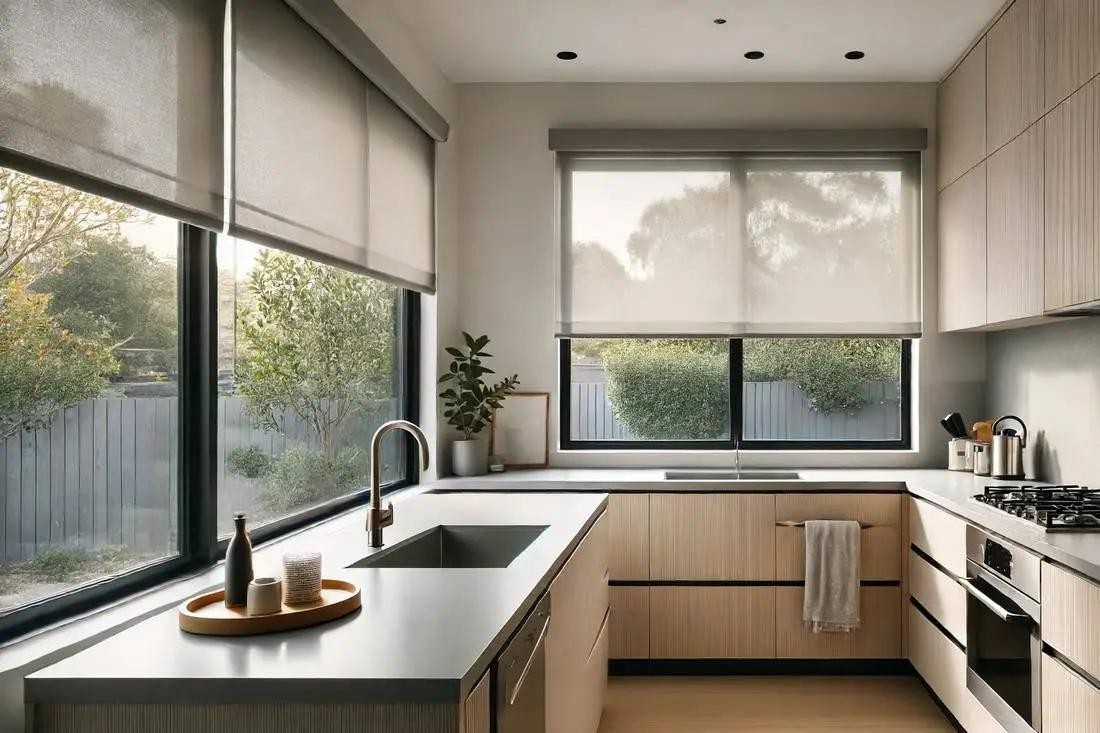
1. PVC Venetian Blinds
PVC venetian blinds give a clean, timber-look finish without the risk of warping that real wood faces near heat and humidity. The slats are fully water-resistant and wipe clean of grease easily, making them a practical match for windows near sinks and stovetops, with the added benefit of being able to tilt the slats to control light without losing airflow.
2. Blockout Roller Blinds
A blockout roller blind is a low-fuss option for a kitchen window that catches strong afternoon sun. The fabric is durable and wipeable, rolls flat and compact against the window, and stays clear of splashback areas and benchtops, while still giving full control over glare during the day.
Bathroom: Waterproof First, Decorative Second
Bathrooms combine near-constant humidity with a strong need for privacy, which is why waterproof blinds tend to outperform fabric curtains here.
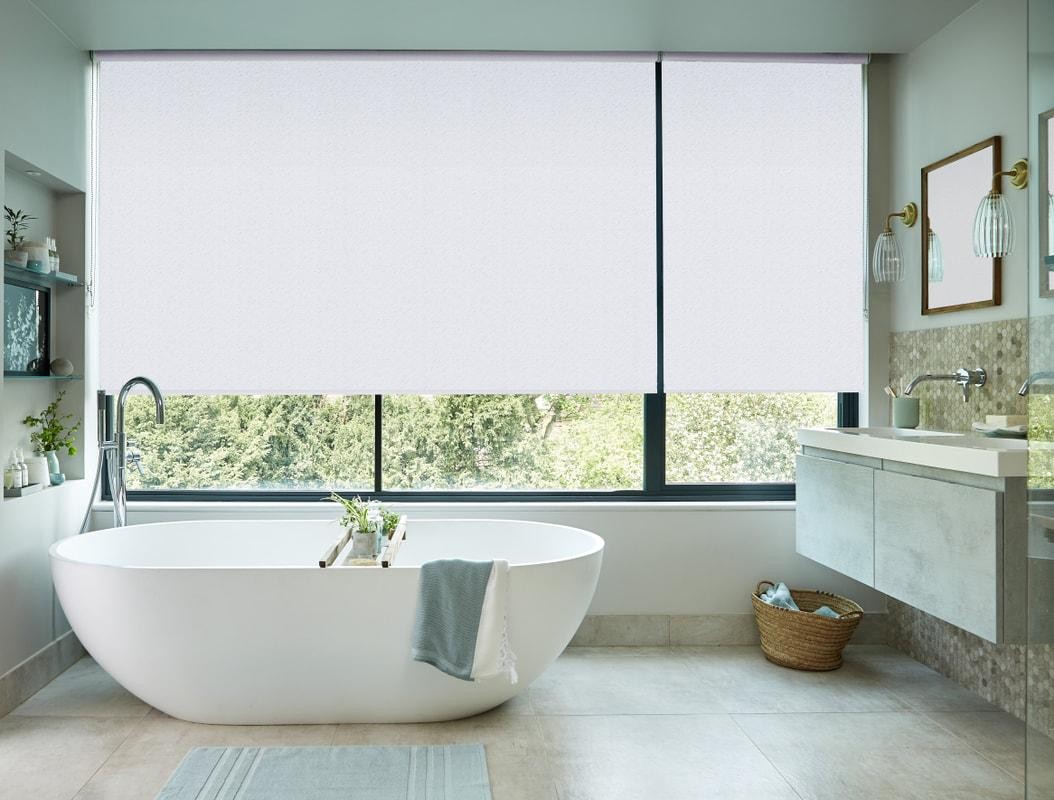
1. Waterproof Vinyl Roller Shades
Vinyl and PVC-based roller shades handle steam and splashing without warping, staining, or developing mold, making them a low-maintenance choice for showers and ensuites.
2. Sheer Curtains Paired With a Blockout Roller Blind
For a softer, more decorative look with full night-time privacy, pair a sheer curtain with a blockout roller blind mounted behind it. The sheer stays drawn by day for light and style, while the roller blind closes behind it for total privacy after dark.
Living Room: Balance Style With Everyday Function
The living room needs the widest range of light control: bright and airy by day, cosy and private by night.

1. Ceiling-Height Sheer Curtains
Mounting sheer curtains from ceiling height, rather than just above the window frame, is one of the simplest ways to make a room feel taller and larger, drawing the eye upward while keeping the space feeling open.
2. Blind and Curtain Combination Ideas
A common approach to combining blinds and curtains: pair a neutral roller or zebra-style blind for everyday light control with a bolder, patterned curtain on either side as a framing feature. The blind does the practical work of adjusting light, while the curtain panels add colour and softness, giving more precise control than either option alone.
3. Modern Window Blinds for the Living Room
For a modern look, current trends favour clean-lined, low-profile blinds – slim rollers, dual-layer zebra blinds, or slatted venetians in neutral tones like greige or charcoal. These pair well with minimalist furniture, letting the window become part of the room’s architecture rather than a busy focal point.
Quick Comparison: Curtains and Blinds by Room
Here’s how the four rooms compare at a glance.
| Room | Top Priority | Best Blinds | Best Curtains | Why It Works |
|---|---|---|---|---|
| Bedroom | Darkness, sleep, warmth | Blackout roman blinds | Double curtains (sheer + blockout layered) | Blockout fabric seals light at the edges and insulates against heat and cold |
| Kitchen | Durability, easy cleaning | PVC venetian blinds, blockout roller blinds | Best avoided near sink and stovetop | Water-resistant, wipeable materials that won’t warp with heat or steam |
| Bathroom | Waterproofing, privacy | Waterproof vinyl/PVC roller shades | Sheer curtain over a blockout roller blind | Handles humidity without mould, full privacy after dark |
| Living Room | Style with flexible light control | Slim roller, zebra or venetian blinds in neutral tones | Ceiling-height sheers, patterned framing panels | Blind does the daily light work, curtains add height and personality |
What Homeowners and Interior Experts Say About Layering
Design experts consistently point to layering as the difference between a finished window and an unfinished one:-
• A functional base layer, like a blind, paired with a decorative curtain on top, brings texture and depth to a window.
• This combination creates a tailored finish that a single treatment rarely achieves on its own.
• The base layer (blind or blockout curtain) handles the practical job of controlling light and privacy.
• The decorative layer (sheer curtain or patterned drape) brings the personality and finishes the look.
Layering sheers with solid drapes adds a tailored, high-end feel, making your windows the room’s crown jewel.
This approach holds true across every room covered above.
Final Thoughts
Bedrooms benefit most from blockout options that protect sleep, kitchens and bathrooms need materials that shrug off moisture and grease, and living rooms tend to look their best when curtains and blinds are layered together rather than used alone.
MyDirectBlinds offers a wide range of custom blinds and curtains across Australia, with free fabric samples available so you can see exactly how a fabric or blind looks in your own home before you commit. Whether you’re after blockout curtains for the bedroom or a blind and curtain combination for the living room, it helps to test a sample against your actual wall colour and lighting first.
Ready to Refresh Your Windows? Explore custom made curtains and blinds for every room, with free fabric samples delivered to your door. Shop now and give your windows the finish they deserve.
Frequently Asked Questions
1. What’s the difference between blockout curtains and sheer curtains?
Blockout curtains use dense, often lined fabric that blocks nearly all external light, ideal for bedrooms and media rooms. Sheer curtains use lightweight, translucent fabric that filters and softens light, suiting living rooms and kitchens where brightness matters more than total privacy.
2. Can I use curtains and blinds on the same window?
Yes – it’s one of the most popular design choices. A blind handles precise light and privacy control, while a curtain layered over or beside it adds colour and a finished look, especially in living rooms and bedrooms.
3. Which window treatment is best for a bathroom or kitchen?
Moisture-resistant options are best: waterproof vinyl roller shades for bathrooms, and faux wood roller blinds or tailored café curtains for kitchens, since both resist moisture and grease better than standard fabric curtains.
4. Do blockout curtains actually help with energy bills?
They can. Dense, well-lined blockout fabric acts as an extra insulating layer at the window, reducing heat loss in winter and heat gain in summer, which can ease the load on heating and cooling.
5. What’s a good blind and curtain combination for a living room?
A neutral roller or zebra blind underneath, paired with bolder, patterned curtain panels on either side, is a popular approach. The blind manages daily light control while the curtains add personality without overwhelming the room.
6. How do I choose curtain length and height for a bigger-looking room?
Hang curtains as close to the ceiling as possible and let them fall to just above the floor. This is especially effective with sheer curtains, as it draws the eye upward and makes the room feel taller.